



Storytelling is a chance to know ourselves better, to really question who we are, where we've been, and who we want to be." – Alice Wong
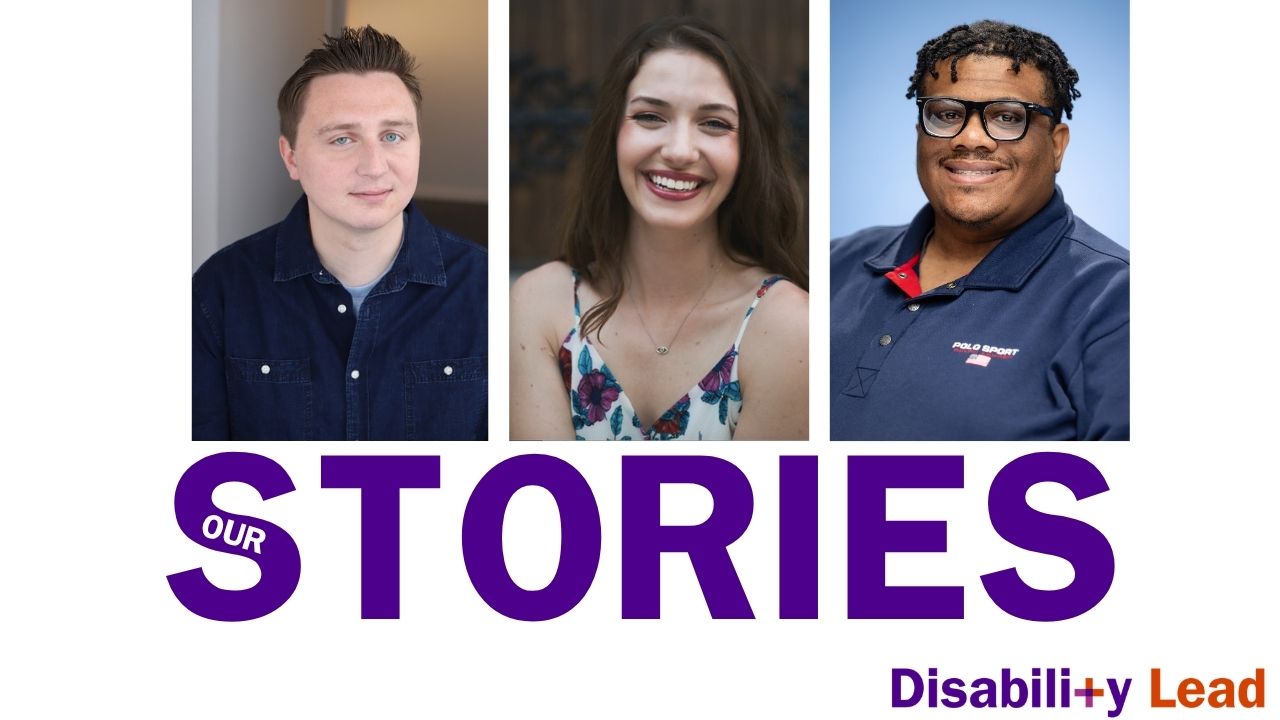
Power is built through storytelling. When we elevate authentic stories, we can disrupt myths and build authentic connections. In this edition of storytelling with Disability Lead, on the cusp of Disability Pride Month, three Members, Timotheus “TJ” Gordon, Jr., Jon Haven, and Liliana Schiller, all of whom are proudly Autistic, shared their stories. We thank them for sharing because finding the right words requires labor and vulnerability, but the results can be a catalyst for change.
Trigger Warning: Some of the content explored in the featured stories may be triggering for some, including strong language and topics of emotional abuse, self-harm, and therapy-induced trauma.
Timotheus “TJ” Gordon Jr.
“My name is more than a word that identifies me... It is a one-word encapsulation of my values, of what I contribute to society, and of how I influence people, places, and powers to be around me.”
Timotheus reflected on the profound meaning behind his name and how the continuous reduction of his name parallels his experience of being reduced to fit others' expectations. He discussed his experience navigating the world as a Black, Autistic man, being regarded as a “show pony” for his achievements, and being forced into a narrow role. Rather than accepting this caricature of what society wants him to be, Timotheus reclaimed the narrative through his academic endeavors, nationally recognized research, and advocacy for the disabled community. He continues to encourage his community to find this same sense of self-championing and ask of others, “Why do you think disabled labor has no value?”
Watch Timotheus’ story at 02:56.
Jon Haven
“The rules are BS, except when they are not. And they are usually enforced on us.”
Jon recounted his experience as an Autistic and ADHD professional who spent a decade navigating the world of applied behavior analysis (ABA) therapy, a practice he later came to vehemently oppose. Growing up, he was forced to mask out of necessity, hide his differences, and navigate a social hierarchy of unwritten, unequal rules. After school, Jon transitioned from a frontline ABA therapist to a supervisory role, only to realize the system was more broken than he knew. He quickly burned out after realizing this practice only attempted to stop neurodivergent children from expressing their needs. He realized the exact same thing had been done to him. Today, he has overcome his burnout from ABA and proudly works as a disability specialist, supporting young people as they learn to adapt and seek accommodations rather than change who they are.
Watch Jon’s story at 17:07.
Liliana Schiller
“Living by others' expectations is exhausting, and in a world that was not made for disabled people, we must show up as our real selves.”
Liliana opened up about being diagnosed with Autism at age 25. She discussed how it was only when she was working as a teacher at a school for students with disabilities that she began to see her childhood self in their sensory experiences and stimming. From that moment, Liliana realized the complex layers of unlearning required after nearly three decades of socialized masking. This led her to recognize the unique ways that Autistic women are forced to internalize their distress, specifically being praised for seeming less Autistic, while poignantly noting that every time she hears this, “beneath the surface she is boiling, but her smile remains”. She noted how even the diagnostic test itself was designed primarily for young boys. After the initial grief over years of unrecognized struggle, it ultimately became a liberating gateway to embracing her unmasked Autistic identity and advocating for others to do so as well.
Watch Liliana’s story at 32:32.